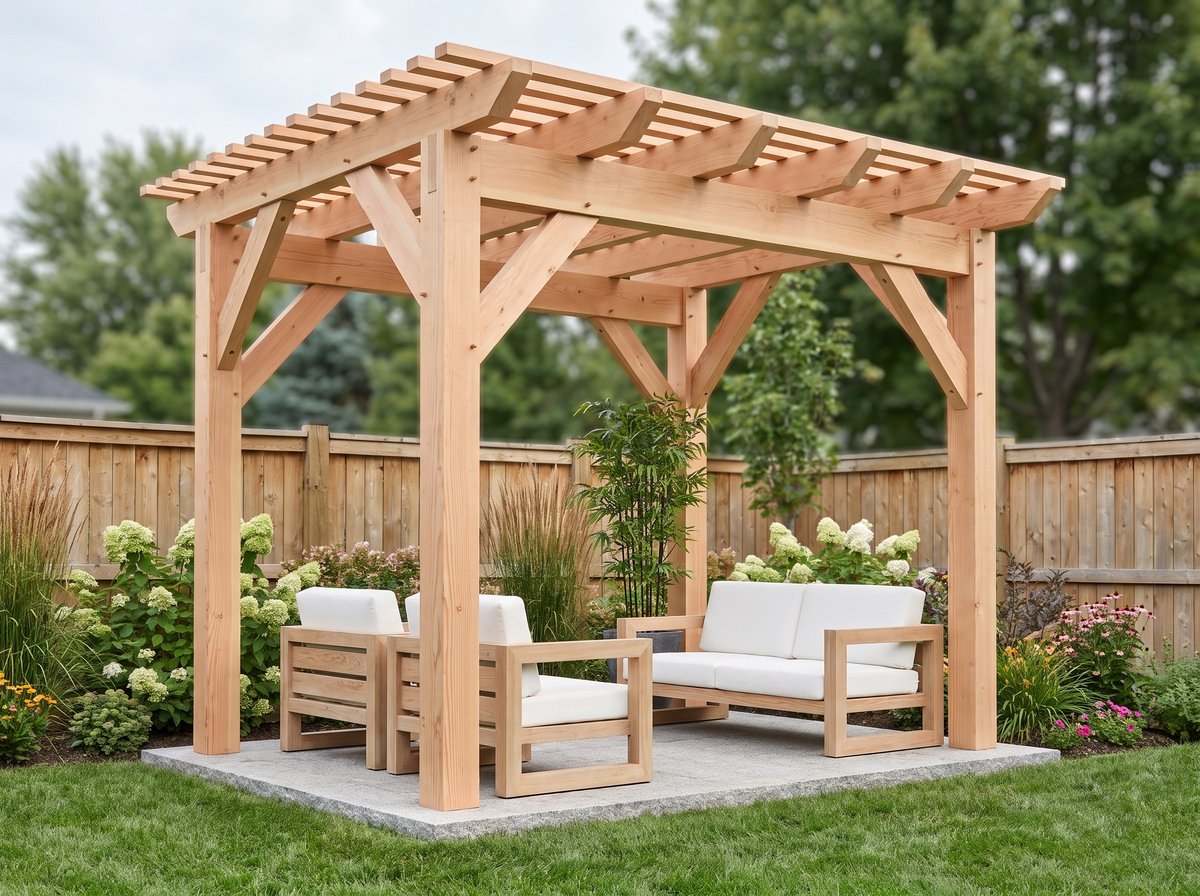
Natural Fir
Real Douglas fir with nothing on it: a light, clean tan that shows every bit of grain. Left alone outdoors, it softens toward silver-gray over a few seasons.
Natural Douglas fir is where every build starts. From there you can take it anywhere from a light Pinto White to a flat, dark Slate. Each finish below is shown on the same rendered pergola, or on a real job we built in that color.
Every Stillbury structure is built from real Douglas fir. Natural is the default, and plenty of people stop right there. If you want color, we finish it in one of the stains below.
All of these are penetrating stains, not film finishes. They soak into the wood and leave the grain visible, so the structure still reads as timber rather than something painted.
The renderings below are all the same 10 by 12 structure, shown the same way, so the only thing that changes is the finish. A card marked as a real build shows a job we finished in that color.
Real Douglas fir with nothing on it: a light, clean tan that shows every bit of grain. Left alone outdoors, it softens toward silver-gray over a few seasons.
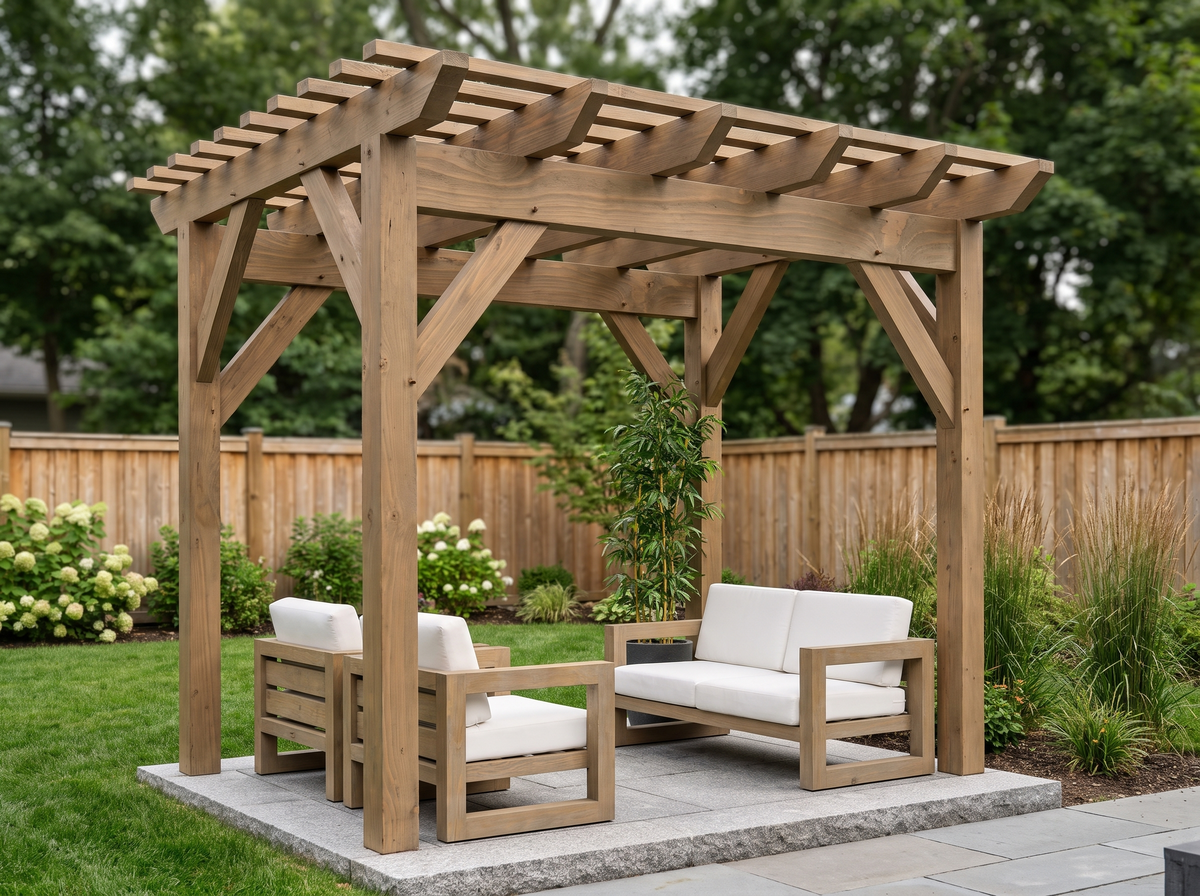
Warmer and slightly deeper than bare fir, without tipping into orange or gold. The easy pick when you want the wood a little richer but still light.
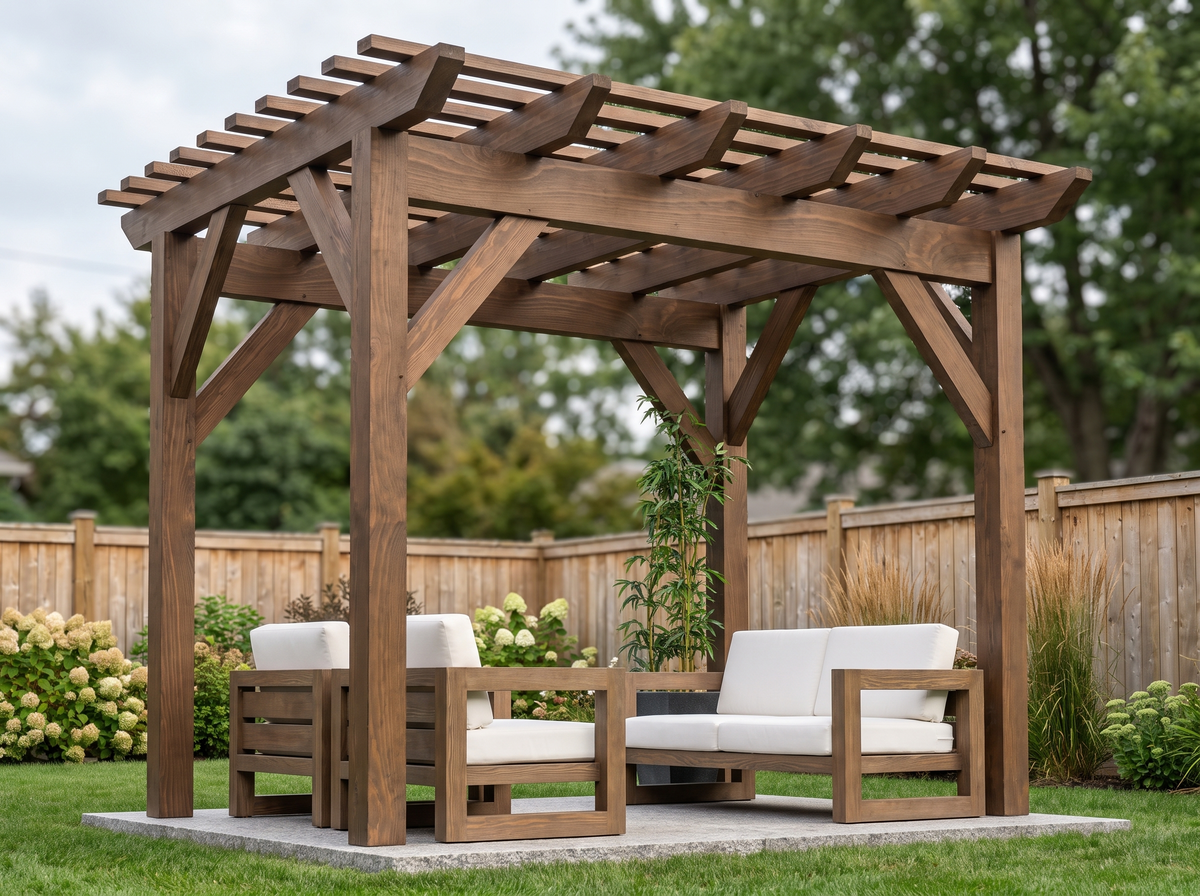
A true brown with some weight to it. Reads warm against light siding and stone, and shows dust and pollen far less than the pale finishes.
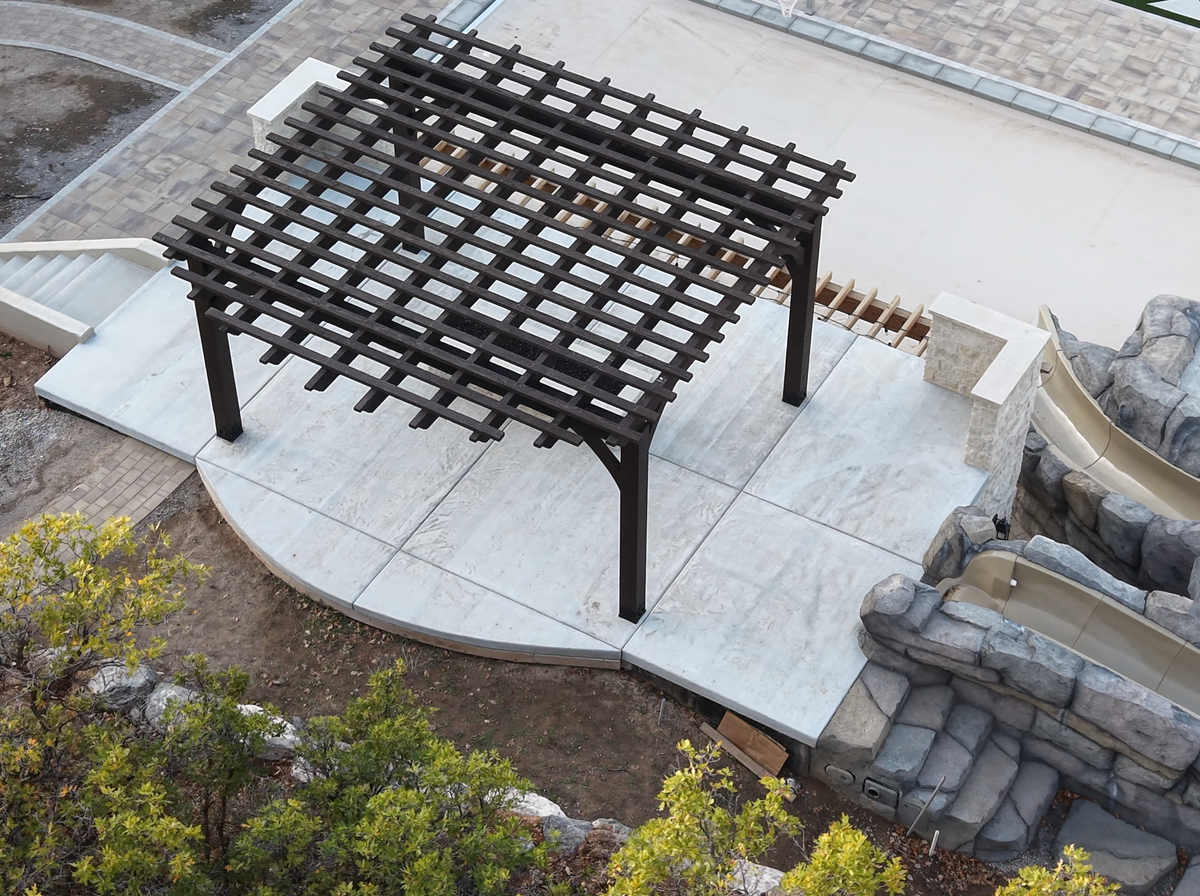
A deep brown that reads close to black in shade and warmer in direct sun, with the grain still showing. The photo is our 18×18 in Elk Ridge, not a rendering.
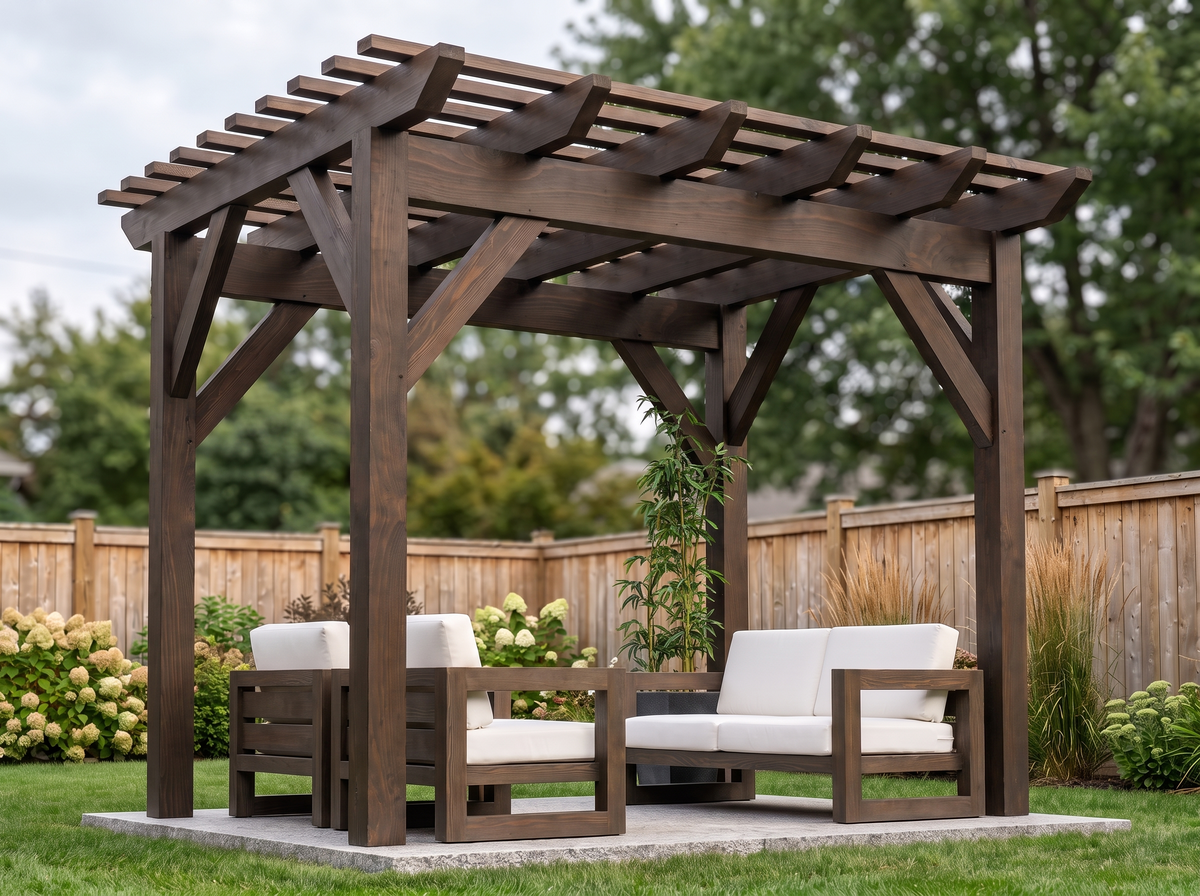
Deep enough to read nearly black in shade, still clearly brown when the sun hits it. For a dark structure that keeps some warmth in the wood.
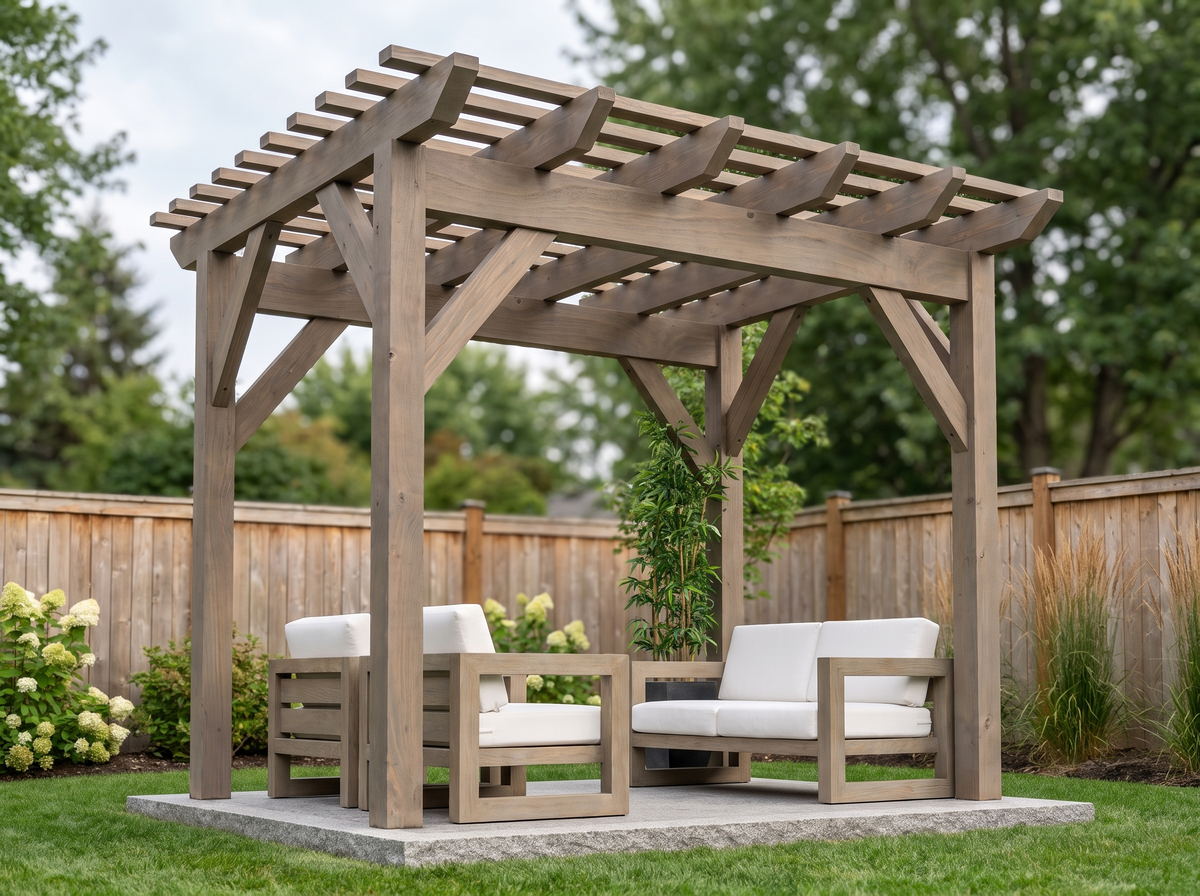
Gray with warmth in it, close to how fir looks after a few seasons outside. Sits well with modern homes, cool gray stone, and black window frames.
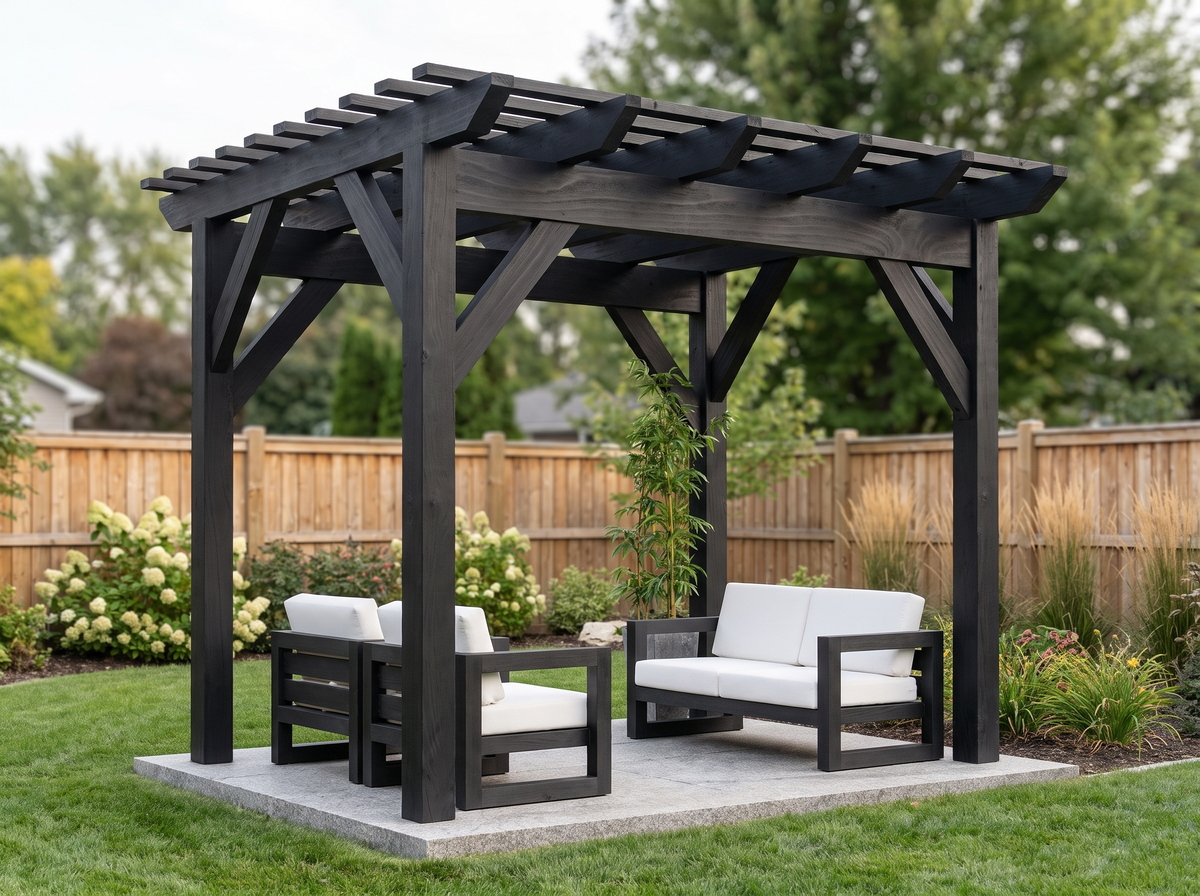
Flat, deep charcoal with the grain still showing through. The strongest contrast against a light house and the most modern look in the lineup.
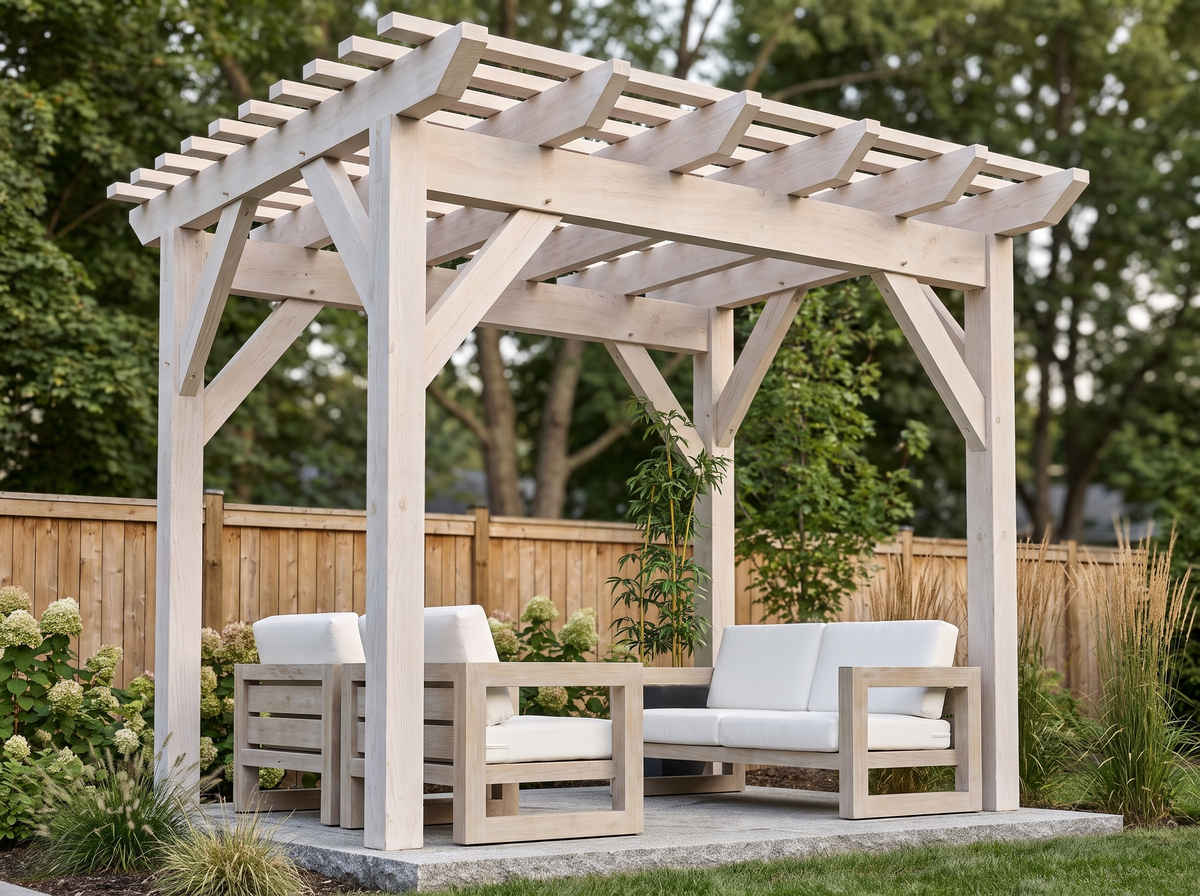
A thin white that lets the grain read through, closer to driftwood than to paint. Keeps a structure light over a patio or near the water.
Pull the color from your trim, fascia, or front door and the structure looks like it came with the house. Go the other way, like Slate against light siding, and it reads as a feature. Both work. Decide which job you want it to do.
Dark Walnut, Cordovan Brown, Espresso, and Slate hide pollen, dust, and water spotting better than the light finishes. Worth knowing if your yard sits under trees.
Natural, Toasted Tan, and Pinto White keep the grain and the timber joints visible. If the woodwork is the reason you are building, do not bury it under a dark finish.
Full southern exposure works on any finish over time. Because these are penetrating stains rather than film finishes, they wear instead of peeling, and they recoat without stripping.
Not sure which way to go? Call us. We will tell you what holds up in your exposure and what we would put on your house.
Yes. Once your design is set, we put your stain on a piece of the same Douglas fir we are building with, so you can hold it against your house in daylight before we commit.
Unstained Douglas fir weathers toward a soft silver-gray over a few seasons. Some people want exactly that. If you do not, a stain slows the change down considerably.
Yes. Your written quote covers the finish along with the structure, so there is no separate charge appearing later.
Sun and weather drive the timing more than anything else, so a full-sun structure needs attention sooner than a shaded one. Because these are penetrating stains, recoating means cleaning and reapplying rather than stripping an old film off.
Often, yes. Our lineup covers what most people ask for, but tell us what you have in mind and we will tell you honestly whether we can hit it on Douglas fir.
Yes. Pergolas, gazebos, cabanas, and pavilions all take the same finishes. We photographed a pergola here because it shows the most timber.
Start with a free 3D design and a written quote built around your yard, your home, and the structure that actually fits your needs